Nozomi
The Reason I JumpNozomi is the daughter born to Shun’s parents after Shun, dead and living in Heaven, chooses to be reborn as their child so they will not remain alone in grief. Named for hope, she arrives without Shun’s memories, yet her childhood brings the story back to the supermarket where he died and to the natural world he loved. Her significance lies in that double movement: she is a new person, not a restored Shun, and still becomes part of the family’s continuing bond with him.
Identity and Arrival
Nozomi enters the story as the consequence of a choice made before her birth. After seeing his mother collapse in grief, Shun tells God that he cannot be happy in Heaven while his parents suffer. God offers him another life as their child, but explains the cost: once born, he will no longer be Shun, and all his memories of being Shun will cease to exist. Shun accepts the condition and asks to be returned to his mother. The story thus makes Nozomi’s beginning inseparable from both a loving decision and an irreversible loss: Shun can return to the family, but not as a conscious continuation of the boy they lost.
Five years pass in the narration. The year after Shun’s decision, a baby girl is born into the family and named Nozomi, meaning Hope. She is due to start kindergarten in the spring of the scene in which she appears. The name gives her a clear place in the family’s recovery, but does not make her responsible for undoing the past. She arrives as their daughter, with a life of her own, while the memory of Shun remains part of the household.
Encounter on the Way to the Supermarket
On the way to the supermarket, Nozomi runs ahead of her mother, thinking about buying chocolate. She does not watch where she is going and bumps into a man wearing a red hat. He asks whether she is all right, then recognizes her with the startled remark that she is back already. Nozomi responds with curiosity, asking whether he knows her and who he is. The man crouches down and tells her that he is an angel.
The encounter echoes the circumstances of Shun’s death. Shun had been hit by a car that ran a red light while he was on his way to the supermarket; in recalling the accident, he remembers freezing when he meant to dodge, then being struck. Nozomi’s own trip to the same ordinary destination brings her into the old man’s path, but the scene does not repeat the fatal accident. Instead, the man’s recognition hints at a connection between the siblings’ lives that Nozomi herself does not understand. Her question leaves that gap intact: the reader sees the return, while she meets a stranger.
Family Grief and Continuing Bonds
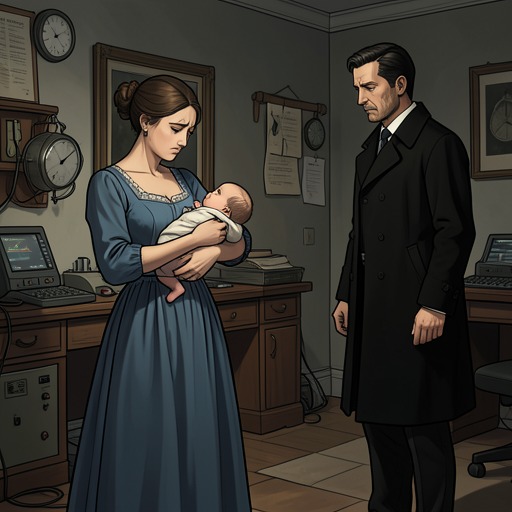
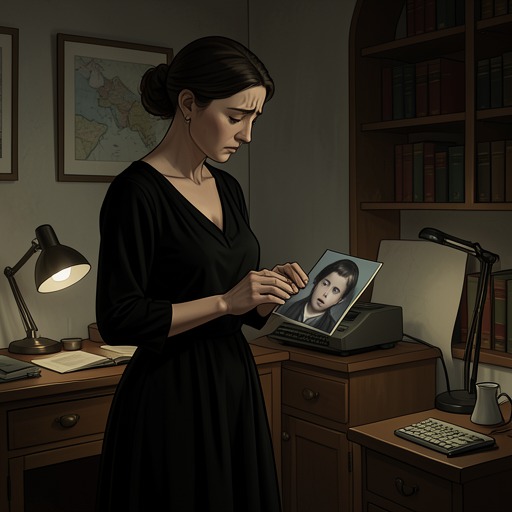
Nozomi is born into a family still grieving Shun. From Heaven, he sometimes visits his parents’ home, glad simply to see their faces and hear them talk about him, though unable to speak to them directly. On one visit, he sees his mother staring at Shun’s photograph, not eating and crying that she cannot go on living without him. Shun is shaken; he had thought she was beginning to recover. He gently hugs her shoulders even though he knows he is invisible, and remains beside her until dark.
The story places Nozomi’s eventual birth after this acute grief rather than presenting it as an instant cure. Shun’s mother later tells herself that she will see him again someday and that she can manage until then. Her renewed life and the new child coexist with remembrance: the family does not have to forget Shun in order to begin again. The snow falling at the window becomes a sign of that distinction. Its crystals are formed from Shun’s tears and serve as God’s proof that a boy named Shun once lived in the world. His father recalls that Shun loved snow, while his mother calls the first snow beautiful. The image lets the parents acknowledge loss and encounter beauty in the same moment.
A New Childhood and the Sibling Connection
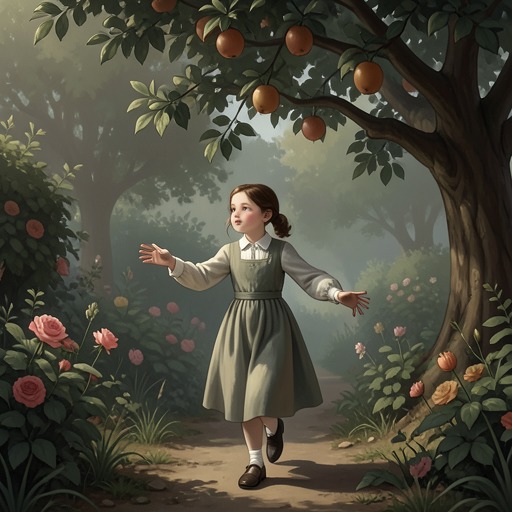
As Nozomi runs ahead from the supermarket, her mother calls after her to wait. Nozomi says she will go on a little and thinks that her mother walks slowly; she is intent on getting to the shop and buying chocolate. The brisk, everyday details establish her as a child absorbed in her own immediate plans, rather than as a vessel for Shun’s past. Her carelessness also brings her into the encounter with the man in the red hat, giving the scene its quiet, unsettling recognition.
Later, on the way back from the supermarket, Nozomi’s mother is thinking of Shun and reassuring herself that she will manage until the day they meet again. Nozomi runs off once more, calling for her mother to come see the cherry trees that her brother used to love. She says that the things her brother liked are the same things she likes, then looks at the blossoms and wonders what kind of person Shun was. This is the story’s most intimate connection between them: not a claim that Nozomi remembers being Shun, but a shared affection that prompts her to imagine the brother she never knew. The scene preserves the question rather than answering it. Nozomi can inherit a family’s love and encounter its memories without ceasing to be herself.
Narrative Role and Ending
Nozomi’s part is brief, but her appearance completes the afterlife story’s movement from bereavement toward renewed family life. Shun’s choice makes her birth possible within the story’s supernatural terms; the later scenes show what that choice means for those left behind. His parents welcome a new child, keep speaking and thinking about their son, and find that memory can accompany a fresh start rather than prevent one.
Her meeting with the angel and her visit to the cherry trees form a gentle return to Shun’s story without closing the distance between the siblings. The supermarket links her childhood to the place associated with his fatal accident, while the blossoms connect her to what he loved. Yet Nozomi asks who the red-hatted man is and wonders what sort of person her brother was: the narrative gives the reader more knowledge than she possesses. Its ending rests on that unequal understanding. Shun’s family has a future in Nozomi, and Shun remains present through their stories, their grief, and the natural things they remember loving with him.